
Western Zodiac · Personality
Cancer Zodiac Sign Personality
The Sign That Feels Everything and Protects Everything It Loves
Cancer protects what it loves with everything it has. The growth is learning that sometimes the most protective thing it can do is let someone actually in.
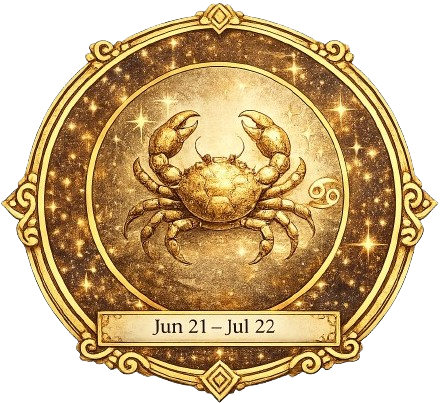
Cancer Quick Facts
Dates
June 21 – July 22
Element
Water
Modality
Cardinal
Ruling Planet
Moon
Symbol
Crab
Best Traits
Compassionate, protective
Shadow Traits
Overly sensitive, insecure
Compatibility
Scorpio, Pisces
Follow Us On Social
Something shifted in the conversation and everyone else kept going. But one person at the table caught it — the half-second pause, the slight change in tone, the way someone’s eyes moved when they answered. They didn’t say anything. They filed it.
That’s the Cancer zodiac sign personality. Not suspicious, not anxious — just operating with an emotional radar that doesn’t turn off, reading what’s beneath the surface while the surface conversation continues.
That’s the Aries zodiac sign personality. Not recklessness. Not arrogance. Just a different relationship with time — specifically, with the idea that thinking and doing are two separate activities that need to happen in sequence.
At A Glance
Core Trait
Reads emotional safety before opening; protects belonging above almost everything
Biggest Strength
Emotional memory, fierce loyalty, and an instinct for what people actually need
Biggest Weakness
Protection turning into emotional isolation; hurt held silently for too long
In Relationship
Deeply devoted; retreats when unsafe rather than naming what's wrong
At Work
Invested, reliable, needs the environment to feel emotionally sustainable
Under Stress
Goes quiet, reads tone obsessively, and remembers the detail long after others have moved on
Cancer doesn’t show you everything. What it shows you is what it has decided you can handle — which is usually less than what’s actually there.
Cancer is the fourth sign of the zodiac — Cardinal Water, ruled by the Moon — and one of the most psychologically intricate. The sensitivity is real, but it’s not the whole story. What the sensitivity is attached to is what distinguishes Cancer from other feeling-oriented signs: protection. Of home, of chosen people, of emotional continuity, of the specific feeling that the ground is solid and the people in the room are safe to be around.
Understanding the Cancer personality means understanding that the shell isn’t defensiveness. It’s architecture. And what it’s protecting is genuinely worth protecting.
Understanding the Aries personality means understanding what that speed actually costs, and what it makes possible that nothing slower could.
How Cancer Moves Through the World
Before Cancer fully engages with a person or a situation, there’s an assessment. Not a conscious, deliberate one — it happens faster than thought, more like a full-body read of whether this environment is safe to be real in. Is this person consistent? Does the energy feel honest? Is there something unsaid underneath the friendliness that will surface later in a way I’ll have to manage?
The warmth, when it’s extended, is completely genuine. Cancer can be one of the most open and nurturing people in a room once that safety has been established. But the establishment takes time and happens through accumulated evidence, not declarations. The person who announced their good intentions with great confidence and then acted inconsistently three times will find that Cancer’s demeanor toward them has shifted in a way that’s difficult to precisely locate but unmistakably present.
Memory is the specific Cancer superpower that gets underestimated. Not general recall — emotional recall. They remember how a moment felt. They remember what was said and what tone it was said in and what was happening in their life at the time. Years later, the detail is still there, with the feeling attached. This makes Cancer capable of extraordinary attentiveness. It also means that emotional injuries don’t fully resolve the way they do in signs with shorter memory.
Cancer doesn’t just remember what happened. It remembers how it felt when it was happening — and that feeling stays.
The Way Cancer Makes Decisions
Cancer decisions run through an emotional filter before anything else. Not sentimentally — practically. The question isn’t just whether this is a good decision on paper. It’s whether this decision serves the people they’re responsible for, whether it aligns with where they feel they belong, and whether the emotional cost of it is something they can actually sustain. A perfectly logical choice that requires them to operate in an emotionally untenable environment is not, in practice, a viable choice.
Intuition carries real weight here. Cancer often has a read on a situation that arrives before the evidence has assembled itself — something feels off, or right, or like it’s going to be more complicated than it looks. They’ve learned, through experience, that this read is usually worth paying attention to. The frustration is in explaining it to people who operate on evidence rather than feeling. “I just know” is not a compelling argument in most professional contexts, but it’s often accurate.
Change is harder when it disrupts what feels like home — and “home” for Cancer is not only physical. It’s the specific configuration of familiar people, established routines, and emotional safety that lets them function without constant vigilance. Disrupting that configuration, even for something objectively better, carries a cost that others sometimes don’t perceive and Cancer can’t always articulate. They’ll resist. Sometimes past the point of sense.
What Happens Under Pressure
When Cancer is hurt or threatened, the first response is inward. The shell closes. Not dramatically — sometimes just a quality of slightly reduced availability, a warmth that stays technically in place while something underneath pulls back. The person on the outside may not know exactly what shifted. They just sense that they’re getting less of Cancer than they were before.
The indirect behavior that surfaces under stress is real and worth naming honestly. Cancer often communicates hurt through withdrawal, through mood, through being technically present while emotionally unavailable — rather than saying directly: this is what happened, this is what I need. The directness feels too exposed. Showing the wound before knowing whether the other person will handle it carefully is a risk that, for Cancer, can feel genuinely dangerous.
The silence after a hurt isn’t nothing. It’s everything Cancer isn’t saying yet, waiting to see if you’ll notice.
Old wounds have a way of getting reactivated under pressure. A current situation that shares the emotional shape of a past injury — a similar tone, a similar dynamic, a similar feeling of not being seen — will carry the weight of both the present and the history. The reaction that looks disproportionate to the current situation often isn’t. It’s proportionate to the full accumulation. The partner or colleague who caused the original hurt may be long gone. The emotional residue hasn’t fully cleared.
How Cancer Handles Relationships
Cancer loves with a quality of attention that most people only experience rarely. The care is practical, specific, and consistent. They remember the small things — the preference that was mentioned once, the difficult thing that was navigated together, the exact circumstances of how something important began. This attentiveness communicates something that bigger gestures often don’t: you are actually known here.
The protectiveness is real and extends in both directions. Cancer protects the people they love, sometimes at cost to themselves. And they protect themselves from people who haven’t yet demonstrated they can be trusted with what’s actually there. The shell isn’t coldness. It’s the caution of someone who has learned that softness is only safe in the right hands — and who takes the time to figure out whose hands those are.
“What Cancer needs in a relationship is not someone who can handle their emotions. It’s someone who makes it feel safe enough to have them in the first place. Those are different requirements, and only one of them actually works.”
The relational difficulty is the indirectness that comes with hurt. When something goes wrong, Cancer’s first instinct is to manage the feeling internally and hope the other person figures out that something is wrong — which they often don’t, with sufficient precision, which then becomes evidence that they don’t really see Cancer, which deepens the wound. The cycle is real, and the exit from it requires the one thing that feels most vulnerable: saying what’s actually going on.
Inconsistency in the people they’ve chosen registers as threat. Not the normal variability of human moods — the kind of inconsistency that suggests someone is a different person depending on context, that the relationship is conditional on things going well. Cancer needs the people closest to them to be the same person when things are hard as when things are easy. This dynamic is specific enough to matter significantly in Cancer compatibility, particularly with signs whose emotional expression is naturally variable.
Money, Work, and Ambition
Cancer’s relationship with money is fundamentally about security — not status, not accumulation for its own sake. The financial goal is the felt sense of not having to worry. Of knowing there’s a buffer between the present moment and a bad one. Of being able to take care of the people who depend on them without scrambling. The number in the account matters less than what it represents: stability, protection, the ability to respond when something goes wrong.
At work, Cancer brings genuine emotional investment. They care about what they’re producing, about the people they’re working with, about whether the place they spend their time actually reflects values they can stand behind. This makes them reliable in a way that goes beyond contractual obligation — they’re not just completing tasks, they’re contributing to something they’ve decided matters. When the work does matter, the output shows it. When the environment is emotionally cold or the values feel misaligned, the output is technically adequate and nothing more.
The caretaking instinct that runs through personal life runs through professional life too. Cancer often ends up in roles that involve looking after people, systems, or projects in some form — not always by design, but because the instinct to notice what’s needed and provide it is strong enough to surface in any environment. This is genuinely valuable. It also means Cancer can end up carrying more of the emotional and practical labor of a team than anyone has officially assigned to them.
Career changes are uncomfortable in proportion to how much of their sense of security has attached itself to the existing role. Leaving something familiar — even something that is clearly limiting them — requires dismantling a piece of the stability structure that took time to build. The resistance to change in professional contexts is the same mechanism as the resistance in personal ones: it’s not about the specific job. It’s about what the job represented.
The Emotional Pattern Underneath the Personality
What Cancer is protecting is belonging. Not just in the literal sense of family or home — in the psychological sense of having a place in the world that is reliably, unconditionally theirs. The sense that the people who matter most will still be there tomorrow, that what has been built is durable, that the emotional investments made were not made into something that will disappear.
The shell — the guardedness, the caution about who gets access to the real version — is not a character flaw. It’s the rational response of someone who understands, at a felt level, that the softness underneath is genuinely vulnerable. And that softness is real. The Care is deep. The capacity to love is substantial. Cancer knows this about itself, and it also knows that not everyone who has access to it will treat it carefully. The shell exists because the inside is worth protecting.
What Cancer is often trying not to feel is the particular loneliness of caring more than the other person cares back. The unreciprocated investment. The discovery that something they were certain about turned out to be uncertain. This is the thing the protection is built against — and also, unfortunately, the thing that the over-protection eventually creates, because relationships that never get past the shell can’t provide the belonging that the shell was built to defend.
How Cancer Shows Up at Their Best and Worst
The gap between Cancer at their best and Cancer under stress is the gap between a home and a fortress.
Cancer at their best
The person who creates the environment where everyone relaxes without knowing why. Who notices that something is off before it’s been said. Who remembers the specific thing you mentioned three months ago and brings it up because they were thinking of you. Devoted in a way that doesn’t require acknowledgment. The relationship with them feels like being actually known.
Cancer under stress
Withdrawn and hard to reach. Giving short answers to direct questions while the real conversation happens entirely inside their head. Reading subtext into neutral messages. Holding the hurt quietly while hoping someone notices — and getting further hurt when they don’t notice fast enough. Unable to say the thing that would resolve it because saying it feels more dangerous than staying in the silence.
The healthy Cancer knows when the shell is protecting something real and when it’s just keeping the very people out who could help. The stressed Cancer can’t always tell the difference.
The Real Growth Edge
The Cancer growth edge is not about feeling less. The depth of feeling is not the problem — it’s the source of everything valuable about this sign. The growth edge is about what happens to that depth when it doesn’t have a direct route out.
Unexpressed hurt doesn’t disappear. It accumulates, it builds, it shapes behavior in ways that the person on the outside can feel but can’t locate — because nothing has been named. The indirect communication that Cancer defaults to under pressure protects them from the vulnerability of saying the thing clearly. It also guarantees that the thing won’t be addressed, because you can’t fix what you haven’t been told exists.
The specific Cancer growth edge is directness — not aggressive directness, not demanding directness, but the simple willingness to say: this is what happened, this is how I felt about it, this is what I need. Delivered in the way only Cancer can deliver things: with care, with warmth, with genuine attention to the other person’s experience. The same emotional intelligence that makes Cancer such an exceptional presence can be turned toward honest communication. The question is whether the fear of what directness might cost is worth the certainty of what silence will.
Protection that becomes isolation isn’t protection anymore. The Cancer zodiac sign personality has always been capable of the kind of intimacy that most people spend their whole lives looking for. The growth edge is learning that the safety it’s been waiting for — the safety to finally be fully seen — is not something that arrives before the risk. It arrives because of it.
Frequently asked questions
Aries individuals are known for being confident, energetic, and bold. They are natural leaders who enjoy taking initiative and are not afraid to face challenges head-on.
Aries’ strengths include courage, determination, and enthusiasm. Their weaknesses can be impatience, impulsiveness, and a tendency to act before thinking things through.
Aries is typically most compatible with Leo, Sagittarius, and sometimes Gemini. These signs match Aries’ energy and passion, creating exciting and dynamic relationships.
Aries is a Fire sign, which explains its passionate and dynamic nature. It is ruled by Mars, the planet associated with action, energy, and drive.
In relationships, Aries is passionate, loyal, and protective. They love excitement and honesty but may need to work on patience and understanding their partner’s needs.
Aries is motivated by challenges, competition, and the desire to succeed. They thrive in situations where they can prove themselves and take the lead.